Sunday, 14 March 2021

Flintstones Weekend Comics, October 1964

Four comics this month. The blog has posted the last one before but this is the whole month's worth.

The layouts are excellent. October 4th features a silhouette panel, October 18th has a great target background and rain effects in the last few panels, and Dino sneaks in an appearance in the last two comics (does he have a doll's arm in his mouth on the 18th). Betty is absent again.


October 4, 1964.


October 11, 1964


October 18, 1964


October 25, 1964.

Saturday, 6 March 2021

Don Messick Helps Others

Don Messick was Hanna-Barbera’s first major supporting character actor. Except when Joe Barbera went on a kick of finding “different voices” in 1959 (hence the hiring of Doug Young and Elliot Field, Hal Smith and several others), Don M. seems to have been the go-to guy in almost every series for incidental and one-shot roles. Finally he became a star when a Great Dane series hit the CBS airwaves in 1969.

I only met Don Messick through my TV set and what I see in the papers, as Will Rogers would say, but he always strikes me as a pretty unruffled and helpful guy, unaffected by the pitfalls of egos and celebrity-ism that make some show-bizzers feel oh-so-superior. If you’ve never read Mark Evanier’s Messick memorial, go here. Even if you have, it’s excellent and worth reading again.

Don flew to Racine, Wisconsin in 1990 to help in a benefit. It appears a local hospital brought him in his Christmas fund-raising drive against cancer. He doesn’t say an awful lot in this story by the Journal Times but any comments from him are good to see in print. This appeared in the November 26th edition, along with the photo.

Messick would succumb to a lengthy illness in 1997.


The house imagination built
Animators draw theme of Christmas House

By Jans Rider
Journal Times
Don Messick's first inkling that his voice had the potential to someday team up with some of the nation's top animated characters came after a crackle and a change of pitch during his teens.
It was then Messick began to realize his voice flexibility and possibilities.
Today he can be heard as the voice of Scooby Doo, Bamm Bamm, Astro the Dog, Boo Boo Bear, Papa Smurf, Dr. Benton Quest from "Johnny Quest" [sic] and Ranger Smith from "Yogi Bear."
He was just one of several talented voices and animators Sunday at St. Luke's Hospital's 1990 Christmas House for Cancer, at 11th and Main streets, and the Spectacular Salute to Animation at the Masonic Lodge, 11th Street and Wisconsin Avenue.
Familiar phrases
As a stream of guests flowed through the hall, Messick uttered the familiar phrases of his characters into a microphone and signed autographs for the public. At the young age of 15, Messick, who was raised in Maryland, wrote and performed on his own radio show. After high school he decided to attend acting school in Baltimore. Through the years he did live television puppet shows and radio shows.
By 1957, he began working for Hanna Barbera cartoons.
His favorite cartoon character voice is Scooby Doo, he said with a grin, a voice he has done for 20 years.
"Perhaps it's because he is my longest running voice-over. He also has so many human-like qualities, and I think I'm particularly partial to dogs," he said, smiling.
Currently, Messick does the voice of Hampton J. Pig, a character on a show called "Tiny Toon Adventures," produced by Steven Spielberg for Warner Brothers. "It's a No. 1 show that just began airing nationally in September," he said.
Just a few feet from Messick's booth were three animators for Walt Disney Studios.
Captive audience
Ed Murietta, of Burbank, Calif., who worked on "Who Framed Roger Rabbit?" and "Oliver and Company," had a captive audience as he took less than a minute to draw a quick clear sketch of Mickey Mouse.
Murietta has worked seven years for Disney studios, he said. On display at his table were a few of his sketches including Winnie the Pooh, Mickey Mouse and Roger Rabbit. He said he enjoys drawing Roger Rabbit the most.
Mickey Mouse is the most difficult to draw because the rodent is so identifiable to his public and any alteration in the character will be spotted quickly.
"Disney artwork is very structured. Every character is structured because they have to animate. Every character is designed with animation in mind," he said.
24 drawings per second
To cover one second of onscreen animation, Murietta and his assistants must produce 24 drawings of the character which, for example, might be blinking an eye of cracking a smile, he said.
Pat Boelter, a hospital spokeswoman, said the hospital decided to salute animation this year because there are so many anniversaries of shows and characters in 1990. To name a few, the Flintstones turned 25, Betty Boop became 60, and Disneyland is celebrating its 35th anniversary.
Boelter said Messick was invited to the salute because he has been a legendary voice for many of the country's animated characters.
"We wanted him to be a part of the celebration," she said.
Joining Messick and animator Murietta were Michael Horowitz, an animator who has worked on Disney mainstays such as Donald Duck, Mickey Mouse and Goofy, and Dave Pacheco, the creator of "Who Framed Roger Rabbit?" and "The Little Mermaid."
Demonstrations, appearances and displays will continue through Dec. 9 at the Masonic Temple. Boelter expects attendance to reach 40,000, up about 10,000 from last year's events.

My thanks to Devon Baxter for clipping the article.

Sunday, 21 February 2021

Flintstones Weekend Comics, September 1964

Seven years ago, this blog featured Flintstones Sunday comics from 1964. Unfortunately, I stopping finding readable copies so there were no posts for four months. Lately, I accidentally found a source with the four months’ worth of comics so I’m going to post them.

Actually, at least two of them did get posted along the way, but we’ll bring you the full month.


September 6th: “Write it down” may be the cleverest line of the month. And an ink pen and dial telephone really are Stone Age.


September 13th: I guess those are little baby dinosaurs near the pointing kid in the last panel. We get silhouetted characters and non-smoking volcanoes.


September 20th: Fred and Wilma always seemed to have a better wardrobe in the comics than on TV. I’m still not much on the thinking Pebbles but it seems to work in the comics. As you can see, Mr. Slate is not Fred's boss in the comics.


September 27th: It’s always nice seeing Dino get some space. Betty doesn’t appear this month. In fact, she doesn’t appear next month either. I guess it’s only in the comics that Dino says “Gleef Gleef.”

Click on any of the comics to enlarge them.

Saturday, 13 February 2021

He's Still a Top Cat

It’s tough to say how much the older Hanna-Barbera cartoons are in the public consciousness these days. I don’t watch TV so I couldn’t tell you if any channel is airing them. The Flintstones got a Blu-ray release last year and The Jetsons came out in the same format a year earlier, so the people at Warners still thinks there’s a market for some of the cartoons.

This is a roundabout way of saying I was surprised to see a story the other about some of Hanna-Barbera’s output, including Top Cat. It was in, of all places, The Press and Journal of Aberdeen, Scotland. Granted, it appears to be a column designed to bring about nostalgia in older readers, but it’s better than nothing. You can read it here.

You’ll have a good laugh at how the writer praises Bill and Joe’s Tom and Jerry cartoons at MGM—with a frame from a Chuck Jones Tom and Jerry! And you’d think he’d mention that Ken Muse animated both the MGM Tom and Jerry cartoons and Top Cat (in the frame above, you can see the same expression he gave Tom in a number of theatrical shorts).

Meanwhile, the Gwinnett Daily Post this week had a trivia question about the series.

And over at the
NBC Right Now site, a lifestyles writer has named Top Cat number 86 in its list of the Top 100 TV shows of the ‘60s (people love lists).

Incidentally, The Hollywood Reporter blurbed on July 16, 1961:


Writer-cartoonist Tony Benedict has been signed to a three-year exclusive pact by Bill Hanna and Joe Barbera. As his first assignment, Benedict will tele-script two “Top Cat” shows.

Tony has mentioned to me did work on Top Cat but he wants to make it clear that he started at Hanna-Barbera in 1960 without a contract, first writing and storyboarding the Huckleberry Hound and Yogi Bear shows (he invented Alfie Gator on the Yakky cartoons) and moved on to the half-hour comedy prime-time shows, and others “too humorous to mention,” he tells me. I was hoping he could tell me which T.C. episodes he wrote, as the credits were snipped from the shows some time ago (before the DVD release), but I am awaiting a response.

Saturday, 6 February 2021

Le Hound et Le Bear Yogi

When the Huckleberry Hound Show DVD came out years ago, it included some of the little cartoons-between-the-cartoons found on the original series. It didn’t contain all of them. Whoever was running Hanna-Barbera then didn’t know where a lot of things were. Considering some bumpers on the DVD were from VHS recordings, those must have come from someone’s personal collection.

Internet TV host Stu Shostak recently purchased a 16mm black and white reel of the Huck show in French and thoughtfully sent me a copy. (This blog has always had good readers). He figured I would be interested to hear the version of the end title theme. More interestingly is it has at least two mini-cartoons that never made it to DVD.

Here’s one. Huck tunes in the next Yogi Bear cartoon. You kids today don’t have to adjust the verticle knob so the picture doesn’t roll.


Someone drew characters in these mini-cartoons with half-moon eyes and little round mouths. I want to say it’s Don Williams but I honestly don’t know.


Yogi steps out of the set to join Huck in watching a Yogi Bear cartoon.


Huck checks out some Yogi butt.


This is a bit off the topic, but it's a story that appeared in the Fresno Bee on May 7, 1961 about foreign dubs of Hanna-Barbera series. I imagine this was a hand-out from Arnie Carr's PR department. By then, Yogi had his own show.


Studio Now Dubs Japanese Spanish To Flintstones
Lloyd Burns, vice president in charge of international operations of Screen Gems announced both Spanish and Japanese dubbing has started on the entire first year's production of The Flintstones.
The Hanna-Barbera animated show, one of the top new entries of the current TV season in the US, has just been sold to Japan. It already has been sold in four Latin American countries: Mexico, Venezuela, Argentina, and Uruguay.
In addition, the series already is on the air in English in five other countries: Canada, England, Australia, Finland and the Philippines.
Hanna-Barbera's Huckleberry Hound, the first made for TV animated series to undergo any dubbing, now is sold in over 30 countries, which brings it close to being an all-time international best seller. Huck now speaks six languages: Spanish, Portuguese, German, French, Japanese and English. Screen Gems distributes all the Hanna-Barbera animated shows, of which there will be five a week on US TV next fall.

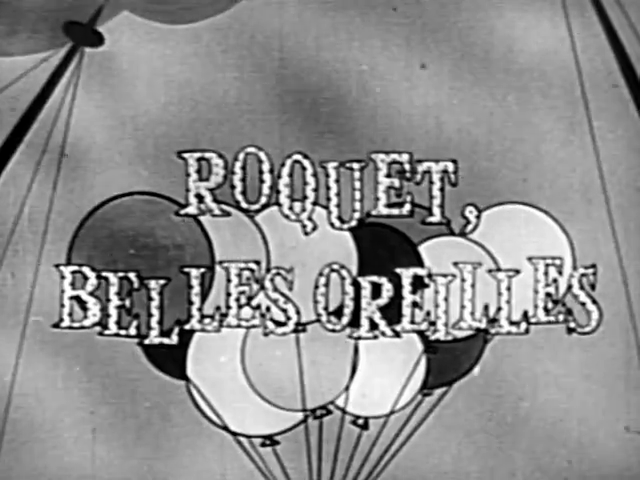
Here’s the opening title card in French.

<

There was no opening/closing animation, just cards. And the reel has something which was chopped off the DVD release. Instead we got a frozen card.


If you’re wondering, the cartoons were Un Cerveau Vagabond, Le Gentil Chaton and Zélé Facteur.


The French version decided to omit the Randy Van Horne singers. For the end titles, the show used the instrumental track (in those days at H-B, the effects and music were mixed onto one track).


Friday, 25 December 2020

No Time Clocks

Joe Barbera seems to have had an obsession with time-clocks.

Maybe he had a bad encounter with one at MGM or Van Beuren. Whatever the case, he mentioned in a number of interviews about the time he was promoting that new TV show The Flintstones that Hanna-Barbera did not have time clocks.

Well, of course they didn’t. They had people working from home in 1960. How were those people going to punch a studio time-clock?

Ol’ Joe was a master story-teller, on the screen at MGM and his own studio, and in print. Here’s a New York Daily News story from December 4, 1960. Joe has already begun the “we were underdogs” stories about the studio. They make for good newspaper copy.

One note: by the time this article saw print, Hanna-Barbera Productions had already moved to the window-less bunker at 3501 Cahuenga at Broadlawn where they resided for several years until the building we’re all familiar with was built. And, from what I understand, it didn’t have time clocks, either.


Here’s a Hollywood Success Story
Three Years Ago, Two Cartoonists Were Jobless, But Now Their TV Films Earn Millions
By BEN GROSS

Three years ago, two Hollywood cartoonists, Bill Hanna and Joe Barbera, were out of jobs and their prospects slimmer than those of a beginner challenging Charles H. Goren to a bridge game. Today, they head the world's biggest cartoon production company, with four series on the air, bringing an income of $3,500,000 a year from TV and $20,000,000 annually from merchandising sales.
The phenomenal rise of these artists-businessmen—a modern version of those antique Horatio Alger tales—has been marked by the creation of the Emmy-winning "Huckleberry Hound" (seen on WPIX, Thursdays, 6:30 P. M.), "Ruff ‘n’ Reddy," "Quick Draw McGraw" and their newest entry, "The Flintstones." The latter, telecast over ABC-TV, Friday nights at 8:30, has been hailed by both critics and public as one of the few innovations television has given us during this season. It is the first half-hour cartoon situation comedy series, depicting in terms of action tinged with satire the adventures of a Stone-Age family.
They Were Down
Fred Flintstone works as a dino (a dinosaur-powered crane) operator. His mate is a typical housewife. Their best friends are neighbors Barney and Betty Rubble. Both husbands bet on dinosaur races and are enthusiastic members of the YMCA, the Young Men's Cave Association. Although the couple live during primitive times, through their words and actions, they manage to comment wittily on the foibles of today.
I wanted to learn how it was possible for two workers in Hollywood's never-never land to achieve so much-within the span of only 36 months. So Joe Barbera, a former New Yorker, had dinner with me in the movie capital's swank Four Trees Restaurant and told his story.
"My partner, Bill Hanna, and I were really down three years ago," he said. "We were working at MGM where we had created those popular Tom and Jerry cat-and-mouse cartoons. Then, suddenly, in 1957, that company decided to discontinue the production of all such features. Movie business was at an alltime low.
"I can tell you we were terribly discouraged. So I applied for a job with Walt Disney and was turned down. We didn't know it at the time, but these setbacks gave us the biggest breaks of our lives.
Time and Money-Saver
"You see, we had devised an entirely new method of producing cartoons for the movies and TV. It's called 'planned animation' and it's both a tremendous time and money-saver.
"So we drew up a memo outlining our system and sent it to MGM. But we never heard from them, just as Disney failed to answer my letter."
"What did you do then?" I asked.
"Well, we wore out shoe leather calling on film companies, advertising agencies and sponsors with our new idea but everywhere we were turned down. 'Your idea is impractical," we were told. "To put on a cartoon situation comedy series would require good animation; good animation is too expensive, and your method calling for limited animation is too shoddy.' "
But finally on July 7, 1957, one TV film producing outfit, Screen Gems, decided to take a chance on the two young men. So their firm, Hanna-Barbera Productions, was born. That year, over NBC-TV, their first series, "Ruff ‘n’ Reddy," the story of a frisky cat and dim-witted dog, went on the air. That began a story of success seldom equalled in the history of Hollywood.
"But just what is your new method? What is this 'planned animation'?" I asked.
"It too technical for the average reader to understand," said Barbera, "but, basically, it involves making fewer drawings for a filmed cartoon. For example, when we did the first ‘Tom and Jerry’ at MGM, we made only 1,400 drawings instead of 17,000 which would have been required under the usual system. The cost was only $200 instead of $20,000.
Only Two-Man Team
"This method would enable a movie studio to turn out 52 half-hour features in only nine months against only 48 minutes of cartoons during an entire year, if old methods were used.
"Bill Hanna and I are the only two-man team in the film industry. We do every phase of the work. It would require 12 to 21 persons employing other systems to equal what the pair of us achieve."
Bill and Joe practice their craft at their plant, made up of three old buildings once used by Charlie Chaplin for his silent films. It is, at first glance, a disorderly place, a collection of offices, some without doors, through which men and women wander seemingly without aim.
"We now have 150 employes," Barbera told me. "Some work some at home. We have no time clocks; we issue no memos; Bill and I are always at home to employes who wish to consult us . . . and we have a profit sharing plan, in addition to paying the highest salaries in the industry."
Barbera promised that the same pleasant conditions would prevail when their studio moves soon into a new plant. "You see, having had a tough struggle myself, I have an appreciation of what people trying to make a living are up against."
Oddly enough, neither Hanna nor Barbera started as artists. The former, born in Melrose, N. M., came to Hollywood as a structural engineer and then finally drifted to a movie company.
Orchard St. Boy
Barbera, born on Orchard St. on New York's lower East Side, March 24, 1911, grew up in Brooklyn, where he attended Erasmus Hall High School. He took a course in banking, studied at Pratt Institute and in Manhattan’s Art Students League. For a while he worked as an accountant for the Irving Trust Co.
And while there, he began sending cartoons to magazines, many of which sold. Then he heeded the call of Hollywood, finally landing at MGM, where he teamed up with Hanna.
"Although I was sidetracked for a while, I really made up my mind to become a cartoonist when I was 19 years old," he told me. "One memorable day, long ago, at the Roxy Theatre in New York, I saw a Disney cartoon.
"Believe it or not, it impressed me so much that I collapsed. So the next day I wrote a letter to Disney, telling him I wanted to be a cartoonist; but never heard from him. I was terribly disappointed and that is why, whenever possible, I try to encourage young people."
Some Advice
"Speaking of the young ones, how can they break into cartooning today?" I asked.
"First of all, they should take a good course," Barbera said. "Then, they should draw, draw and keep on drawing. Next, they should apply for a job. And remember: Never take 'no' for an answer. Make a pest of yourself. One guy did this to me and just the other day I hired him."
"How much can a good film cartoonist make?" I wanted to know.
"A top animator or artist can get $500 a week. The average one earns about $225," said Barbera. "During the last few years the film cartooning business has declined. And today we are desperate for talent."

Addendum: Bryce Malek saw the time clock note and passes along this memo from Mr. H and Mr. B.